
Finding a puddle of water around your dishwasher can be frustrating, especially when you are unsure where the leak is coming from. A dishwasher leaking from the door, underneath the unit, or around its water connections may be due to anything from a dirty door seal to a damaged hose or a faulty internal component.
The good news is that a dishwasher leaking water often has a simple cause you can check at home. In this guide, we’ll explain the most common causes of dishwasher leaks, how to troubleshoot them, and when to call a professional.
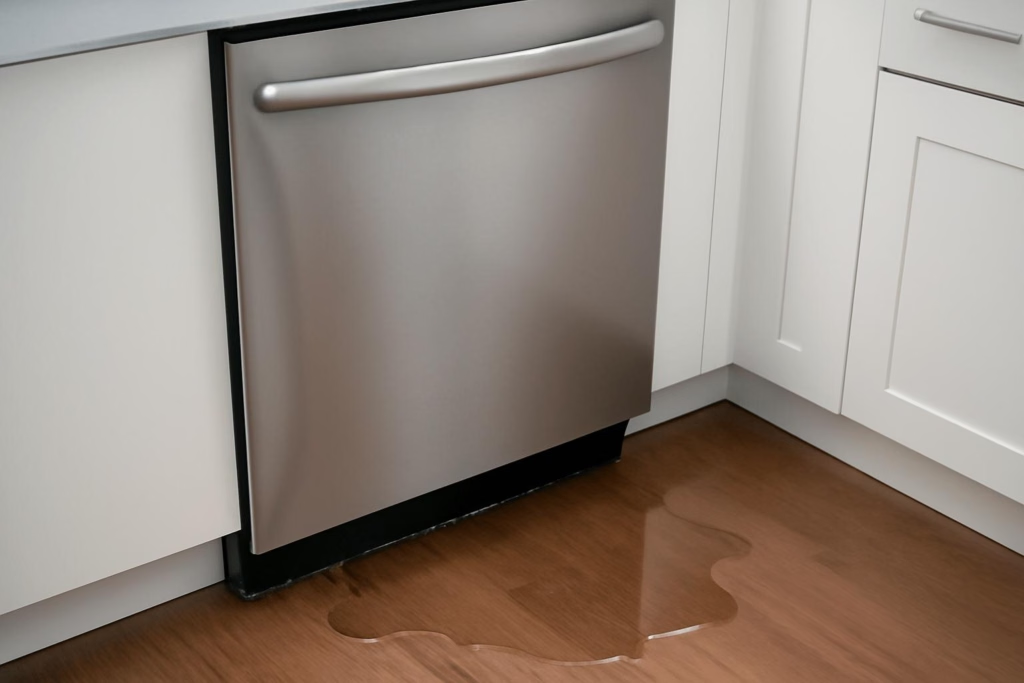
Common Reasons for a Dishwasher Leaking Water
1. Damaged or Dirty Door Gasket
The door gasket is the rubber seal around the dishwasher opening. It keeps water inside the appliance during the wash cycle. Over time, food particles, grease, detergent residue, and normal wear can prevent the gasket from sealing properly.
Signs to look for:
 Water is dripping from the front of the dishwasher.
🔻 Moisture or puddles near the door corners.
🔻 Visible cracks, tears, or flattened areas on the rubber seal.
Possible solution: Turn off the dishwasher and inspect the accessible gasket for dirt, food debris, or visible damage. Gently clean it with a soft cloth and mild soapy water, then dry it thoroughly. If the gasket is torn, loose, or worn out, you may need to replace it with a compatible part.
If cleaning the seal does not stop the leak, the door latch or alignment may also need professional inspection.
2. Using Too Much or the Wrong Detergent
Not every leak comes from a broken component. Using regular dishwashing liquid, hand soap, laundry detergent, or too much dishwasher detergent can create excessive suds. The foam can push water out through the door and other openings.
Signs to look for:
Excessive bubbles or foam inside the dishwasher.
🔻 Water is leaking around the door during a wash cycle.
🔻 Suds remain inside the appliance after the cycle ends.
Possible solution: Use only detergent formulated for automatic dishwashers and follow the amount recommended in your owner’s manual. If you accidentally use regular dish soap, stop the cycle, let the suds settle, then follow your manufacturer’s instructions for draining and cleaning the appliance.
Avoid adding more detergent to compensate for dirty dishes. Excessive suds can make the problem worse.
3. Loose or Damaged Water Supply and Drain Hoses
Your dishwasher relies on hoses to bring in clean water and carry out wastewater. If a hose becomes loose, cracked, or worn, water may leak beneath the dishwasher or inside the surrounding cabinet.
Signs to look for:
Water pooling beneath the appliance.
🔻 Dampness inside the cabinet under the kitchen sink.
🔻 Leaks that appear while the dishwasher fills or drains.
Possible solution: Stop using the dishwasher and, if you can do so safely, shut off its water supply. You can visually inspect accessible hoses and connections for obvious cracks or moisture without removing panels or pulling out the appliance.
A damaged hose or leaking connection may require replacement or proper resealing. If the leak comes from behind or underneath the dishwasher, have a technician inspect it instead of trying to access internal plumbing or electrical components yourself.
4. Clogged Filter or Drainage Problems
A dishwasher filter catches food particles and debris, preventing them from entering the drain system. When the filter clogs, water may drain slowly or remain in the tub. A blocked drain hose or a sink drain issue can also cause drainage problems and leaks.
Signs to look for:
Standing water at the bottom of the dishwasher after a cycle.
🔻 Food debris collecting around the filter.
🔻 Water backing up into the dishwasher or leaking from a sink air gap, if one is installed.
Possible solution: Follow your owner’s manual to remove and clean the dishwasher filter if it is designed to be user-accessible. Check for visible debris around the drain opening and make sure the kitchen sink drains normally.
If water keeps accumulating, the drain hose, pump, or household plumbing may need further inspection. Avoid dismantling the drain pump or reaching into hidden components.
6. Faulty Water Inlet Valve, Pump Seal, or Other Internal Component
If your dishwasher keeps leaking despite basic troubleshooting, the problem may be a mechanical issue inside. A faulty water inlet valve can let water in when it shouldn’t, while worn pump seals or damaged internal connections can let water escape from beneath the appliance.
Signs to look for:
Water is collecting beneath the dishwasher even when the door seal looks fine.
🔻 Persistent leaks during filling, washing, or draining.
🔻 Leaks that return after cleaning the filter or correcting the detergent amount.
Possible solution: Rearrange the dishes so that nothing blocks the door or extends beyond the racks. Check that the spray arms rotate freely and that food debris isn’t visibly blocking their openings.
Avoid overfilling the racks and follow the loading instructions in your dishwasher manual. If the door closes properly and the leak continues, another component may be causing it.
What to Do Immediately When You Have a Dishwasher Leaking
If you notice water around your dishwasher, take these steps to help prevent further damage:
Stop the wash cycle. Turn off the dishwasher and don’t run another cycle until you identify the cause.
Protect the surrounding area. Keep people away from the wet floor and use towels to absorb standing water if it is safe to do so.
Shut off the water supply. If you can safely reach the dishwasher’s water shutoff valve, close it to reduce the risk of additional leakage.
Disconnect power only if it is safe. Never touch a plug, outlet, or electrical control while standing in water. If water has reached electrical components, stay clear and have a qualified person safely isolate the circuit.
Check for obvious causes. Once you control the immediate leak, check for a dirty door gasket, excessive suds, or a clogged, accessible filter.
Arrange professional service if necessary. If water continues to leak, the source is hidden, or you notice electrical warning signs, leave the appliance off and contact a repair professional.
Don’t keep using a leaking dishwasher just because the puddle looks small. Water can seep beneath flooring and cabinets, potentially causing more expensive damage later.
How to Prevent a Dishwasher Leaking Again
Regular care can help reduce the likelihood of leaks and keep your dishwasher working properly.
Clean the door gasket regularly. Remove food particles and residue before they interfere with the seal.
Use the correct detergent. Follow your dishwasher manufacturer’s instructions for detergent type and quantity.
Clean the filter as recommended. Remove accumulated food debris according to the owner’s manual
Load dishes correctly. Keep utensils and dishes away from the door seal, and make sure the spray arms can rotate.
Inspect accessible hoses. Look for cracks, wear, or moisture around visible connections.
Address small problems early. Don’t ignore unusual pooling, poor drainage, or recurring moisture.
Routine maintenance can help prevent some common problems, but worn seals, damaged hoses, and failing internal parts still require repair when they develop.
Dishwasher Leaking? When to Call a Professional
Some issues, such as a dirty gasket or a clogged, accessible filter, can be fixed with basic maintenance. However, if your dishwasher keeps leaking after these checks, we recommend a professional inspection.
Consider scheduling service if you notice:
Water is leaking from underneath the appliance or behind the kitchen cabinets.
A damaged door seal that needs replacement.
Repeated leaks despite using the correct detergent.
Standing water that does not drain properly.
Water entering the dishwasher when it is switched off.
Electrical problems, burning smells, or a circuit breaker that repeatedly trips.
Not sure whether to fix it or replace it? Our guide on repairing or replacing an appliance can help you decide. You can also read about the signs you need an appliance repair technician and learn what other warning signs to watch for.
Frequently Asked Questions
It is best not to. Running a leaking dishwasher can cause water damage to your floors and cabinets and may create an electrical hazard. Turn it off and find the cause first.
Leaks from the bottom are often caused by a loose or damaged hose, a faulty water inlet valve, or a worn pump seal. Because these parts are hidden, a technician can usually diagnose them quickly.
The most common causes are a worn door gasket, a damaged latch, too much detergent, or an overloaded rack that blocks the spray arms.
Simple causes like a dirty filter, too much detergent, or an unlevel machine are often easy to fix. Anything involving electrical parts, the pump, or the water inlet valve is better left to a professional.
Schedule Your Bosch Appliance Repair Today
A small leak today can turn into costly water damage tomorrow. Our experienced technicians at Dars Appliance Repair service all major brands, find the source of your leak, and fix it right. Learn more about our dishwasher repair service or contact us to schedule a visit.